-
Product Name
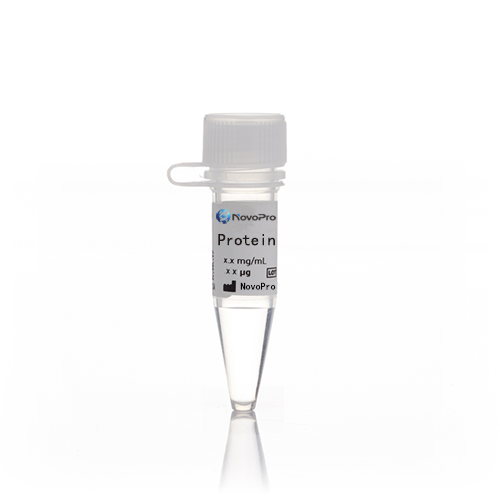
Recombinant PRAME protein (His tag)
- Documents
-
Description
Introducing the recombinant human PRAME protein fragment (residues 174-509), a high-quality tool designed for structural and biochemical studies. This fragment, derived from the Melanoma antigen preferentially expressed in tumors (OIP-4), represents a stable and soluble unit ideal for investigating its roles in ubiquitin ligase complexes and transcriptional regulation. It is an essential reagent for researchers exploring cancer biology and protein degradation pathways.
The full-length PRAME protein, encoded by the PRAME gene in Homo sapiens, functions as a substrate-recognition component of the Cul2-RING (CRL2) E3 ubiquitin-protein ligase complex. This complex mediates the ubiquitination and degradation of target proteins, such as truncated MSRB1/SEPX1 selenoproteins resulting from failed UGA/Sec decoding. In the nucleus, PRAME acts as a transcriptional repressor by inhibiting retinoic acid signaling through retinoic acid receptors (RARA, RARB, RARG), thereby preventing retinoic acid-induced cell proliferation arrest, differentiation, and apoptosis. It associates with chromatin at transcriptionally active promoters bound by nuclear transcription factor Y (NFY) and is implicated in chromatin regulation. PRAME localizes to the nucleus, chromosomes, cytoplasm, Golgi apparatus, and cell membrane, with recruitment to the Golgi apparatus in response to interferon gamma (IFNG) treatment, highlighting its dynamic role in cellular processes.
-
Protein name
Melanoma antigen preferentially expressed in tumors
-
Uniprot ID
P78395
-
Gene Name
PRAME; MAPE; OIP4
-
Source/Expression Host
E. coli
-
Expression Plasmid/cDNA
DNA encoding 174-509 aa (P78395) were fused with 6His tag.
-
Protein Species
Human
-
Molecular weight
Predictes a molecular mass of 39.68 kDa. In SDS-PAGE under reducing conditions, it migrates as an approximately 40 kDa band.
-
Purity
>87%, by SDS-PAGE with Coomassie Brilliant Blue staining.
-
Activity
Not tested.
Related Products / Services
Please note: All products are "FOR RESEARCH USE ONLY AND ARE NOT INTENDED FOR DIAGNOSTIC OR THERAPEUTIC USE"