-
Product Name
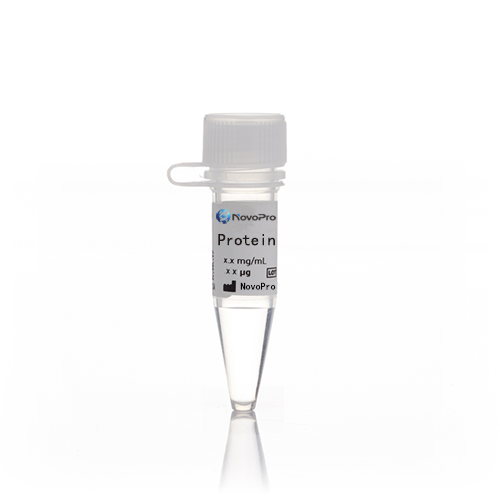
Recombinant CLOCK protein (His tag)
- Documents
-
Description
Recombinant Human CLOCK Protein Fragment (1-391) is a high-purity, functionally active protein encompassing the essential bHLH, PAS 1, PAS 2, and PAC domains. This fragment serves as a critical tool for investigating the core transcriptional mechanisms of the circadian clock, enabling researchers to study domain-specific interactions, DNA binding, and heterodimerization with partners like BMAL1 in circadian regulation and related physiological processes.
The full-length Circadian locomoter output cycles protein kaput (CLOCK) is a central transcriptional activator in the mammalian circadian clock, which governs 24-hour rhythms in gene expression to regulate metabolism, sleep, immune function, and cardiovascular health. It forms heterodimers with BMAL1 or BMAL2 to activate transcription of core clock genes and clock-controlled genes via E-box motifs, while also possessing intrinsic acetyltransferase activity that remodels chromatin and modifies metabolic enzymes. CLOCK shuttles between the nucleus and cytoplasm in a circadian-dependent manner, with its phosphorylated form localized primarily in the nucleus. Disruptions in CLOCK function are linked to diseases such as cancer, metabolic syndromes, and aging, highlighting its broad physiological significance.
-
Protein name
Circadian locomoter output cycles protein kaput
-
Uniprot ID
O15516
-
Gene Name
CLOCK; BHLHE8; KIAA0334
-
Source/Expression Host
E. coli
-
Expression Plasmid/cDNA
DNA encoding 1-391 aa (O15516) were fused with 6His tag.
-
Protein Species
Human
-
Molecular weight
Predictes a molecular mass of 47.13 kDa. In SDS-PAGE under reducing conditions, it migrates as an approximately 50 kDa band.
-
Purity
>85%, by SDS-PAGE with Coomassie Brilliant Blue staining.
-
Activity
Not tested.
Related Products / Services
Please note: All products are "FOR RESEARCH USE ONLY AND ARE NOT INTENDED FOR DIAGNOSTIC OR THERAPEUTIC USE"