-
Product Name
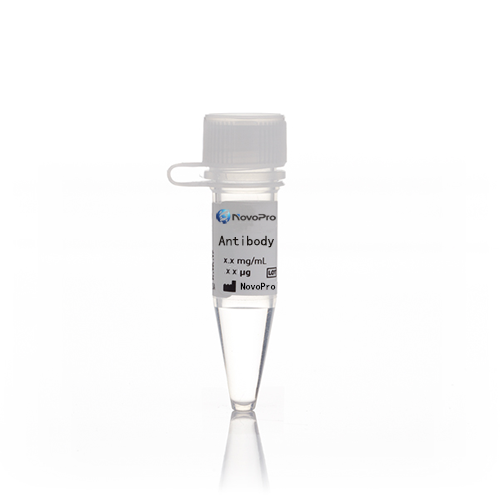
Anti-UBE2H antibody
- Documents
-
Description
Rabbit polyclonal to UBE2H
-
Tested applications
ELISA, WB, IP
-
Species reactivity
Human UBE2H
-
Alternative names
1500009C23Rik antibody; AI181839 antibody; AI326965 antibody; AI462483 antibody; AW227540 antibody; E2-20K antibody; E2-20K antibody; N28148 antibody; UBC8 antibody; Ubc8 antibody; UBCH antibody; UBCH2 antibody; GID3 antibody; UBC8 antibody; UBCH antibody; UBCH2 antibody; E2-20K antibody; Gid3 antibody; Ubc8 antibody; E2-20K antibody; N28148 antibody; AI181839 antibody; AI326965 antibody; AI462483 antibody; AW227540 antibody; 1500009C23Rik antibody
-
Isotype
Rabbit IgG
-
Preparation
Produced in rabbits immunized with purified, recombinant Human UBE2H (rh UBE2H; P62256; Met1-Leu183). UBE2H specific IgG was purified by Human UBE2H affinity chromatography.
-
Clonality
Polyclonal
-
Formulation
0.2 μm filtered solution in PBS
-
Storage instructions
This antibody can be stored at 2℃-8℃ for one month without detectable loss of activity. Antibody products are stable for twelve months from date of receipt when stored at -20℃ to -80℃. Preservative-Free.
Sodium azide is recommended to avoid contamination (final concentration 0.05%-0.1%). It is toxic to cells and should be disposed of properly. Avoid repeated freeze-thaw cycles. -
Applications
WB: 5-10 μg/mL
ELISA: 0.1-0.2 μg/mL
This antibody can be used at 0.1-0.2 μg/mL with the appropriate secondary reagents to detect Human UBE2H. The detection limit for Human UBE2H is < 0.039 ng/well.
IP: 0.5-2 μg/mg of lysate
-
Background
UBE2H is a member of the ubiquitin-conjugating E2 family whose members perform the second step in the ubiquitination reaction. Initially identified as the main process for protein degradation, ubiquitination is believed nowadays to be crucial for a wider range of cellular processes. The outcome of the ubiquitin-conjugation reaction, and thereby the fate of the substrate, is heavily dependent on the number of ubiquitin molecules attached and how these ubiquitin molecules are inter-connected. To deal with this complexity and to allow adequate ubiquitination in time and space, a highly sophisticated conjugation machinery has been developed. In a sequential manner, ubiquitin becomes activated by an ubiquitin-activating enzyme (E1), which then transfers the ubiquitin to a group of ubiquitin-conjugating enzymes (E2s). Next, ubiquitin-loaded E2s are interacting with ubiquitin protein ligases (E3s) and ubiquitin is conjugated to substrates on recruitment by the E3. These three key enzymes are operating in a hierarchical system, wherein two E1s and 35 E2s have been found and hundreds of E3s have been identified in humans.
-
References
- Sjoerd J L van Wijk, et al. (2009) A comprehensive framework of E2-RING E3 interactions of the human ubiquitin-proteasome system. Mol Syst Biol. 5: 317.
- Nandi D, et al. (2006) The ubiquitin-proteasome system. Journal of biosciences. 31 (1): 137-55.
Related Products / Services
Please note: All products are "FOR RESEARCH USE ONLY AND ARE NOT INTENDED FOR DIAGNOSTIC OR THERAPEUTIC USE"