-
Product Name
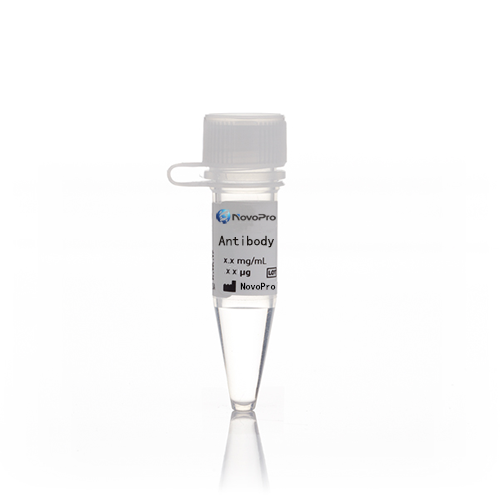
Anti-AARSD1 antibody
- Documents
-
Description
Rabbit polyclonal to AARSD1
-
Tested applications
ELISA, WB, IP
-
Species reactivity
Human AARSD1
-
Alternative names
alanyl-tRNA synthetase domain containing 1 antibody; Aarsd1 antibody; 1110069E20Rik antibody; 2310044P18Rik antibody; AA589600 antibody; AlaX antibody; AlaXp-II antibody; alanyl-tRNA deacylase alaX antibody; alanyl-tRNA editing protein Aarsd1 antibody; alanyl-tRNA synthetase domain-containing protein 1 antibody
-
Isotype
Rabbit IgG
-
Preparation
Produced in rabbits immunized with purified, recombinant Human AARSD1 (rh AARSD1; Q9BTE6-2; Thr176-Glu525). AARSD1 specific IgG was purified by Human AARSD1 affinity chromatography.
-
Clonality
Polyclonal
-
Formulation
0.2 μm filtered solution in PBS
-
Storage instructions
This antibody can be stored at 2℃-8℃ for one month without detectable loss of activity. Antibody products are stable for twelve months from date of receipt when stored at -20℃ to -80℃. Preservative-Free.
Sodium azide is recommended to avoid contamination (final concentration 0.05%-0.1%). It is toxic to cells and should be disposed of properly. Avoid repeated freeze-thaw cycles. -
Applications
WB: 2-10 μg/mL
ELISA: 0.1-0.2 μg/mL
This antibody can be used at 0.1-0.2 μg/mL with the appropriate secondary reagents to detect Human AARSD1. The detection limit for Human AARSD1 is < 0.039 ng/well.
IP: 1-4 μg/mg of lysate
-
Background
AARSD1 belongs to the class-II aminoacyl-tRNA synthetase family, Alax-L subfamily. AARSD1 binds 1 zinc ion per subunit functions in trans to edit the amino acid moiety from incorrectly charged tRNA(Ala). Four transcript variants have been described for AARSD1: NM_025267.3, NM_001136042.2, NM_001142653.1 and NM_001142654.1. It has been determined that the latter two variants represent a distinct upstream locus, which is now represented by GeneID:100885848 (PTGES3L), while the former two variants represent readthrough transcripts between PTGES3L and this locus (AARSD1). The readthrough locus (PTGES3L-AARSD1) is now represented by GeneID:100885850.
-
References
- Tatham MH, et al. (2011) Comparative proteomic analysis identifies a role for SUMO in protein quality control. Oncogene. 19(17):2120-8.
- Kim W, et al. (2011) Systematic and quantitative assessment of the ubiquitin-modified proteome. Mol Cell. 44(2):325-40.
- Udeshi ND, et al. (2012) Methods for quantification of in vivo changes in protein ubiquitination following proteasome and deubiquitinase inhibition. Mol Cell Proteomics. 11(5):148-59.
Related Products / Services
Please note: All products are "FOR RESEARCH USE ONLY AND ARE NOT INTENDED FOR DIAGNOSTIC OR THERAPEUTIC USE"